Many parents wonder, “When should your child have their first eye exam?” Early eye exams are important for children’s eye health. Good vision helps kids learn, play, and grow. If problems are found early, treatment can prevent lasting issues. Let’s explore why early eye exams matter and when to schedule them.
Why Early Eye Exams Are Important for Children
First, healthy eyes help children see clearly. Good vision supports learning and social skills. Sometimes, kids do not know they have vision problems. Because of this, regular eye exams can catch issues early. Early treatment can stop problems from getting worse. According to the American Academy of Ophthalmology, early checks can prevent vision loss and support healthy development.
Recommended Ages for the First and Subsequent Eye Exams
Experts recommend a pediatric eye exam schedule for all children. Here are the key ages to remember:
However, if your child has risk factors, such as a family history of eye problems, they may need more frequent checks. In some areas, access to pediatric eye care may vary. Therefore, check with your local eye specialist for the best schedule.
Signs Your Child May Need an Eye Exam Sooner
Sometimes, children need an eye exam before the recommended ages. Watch for these signs of vision problems in kids:
If you notice any of these, schedule a children’s eye exam right away. Early action can make a big difference.
What to Expect During a Child’s First Eye Exam
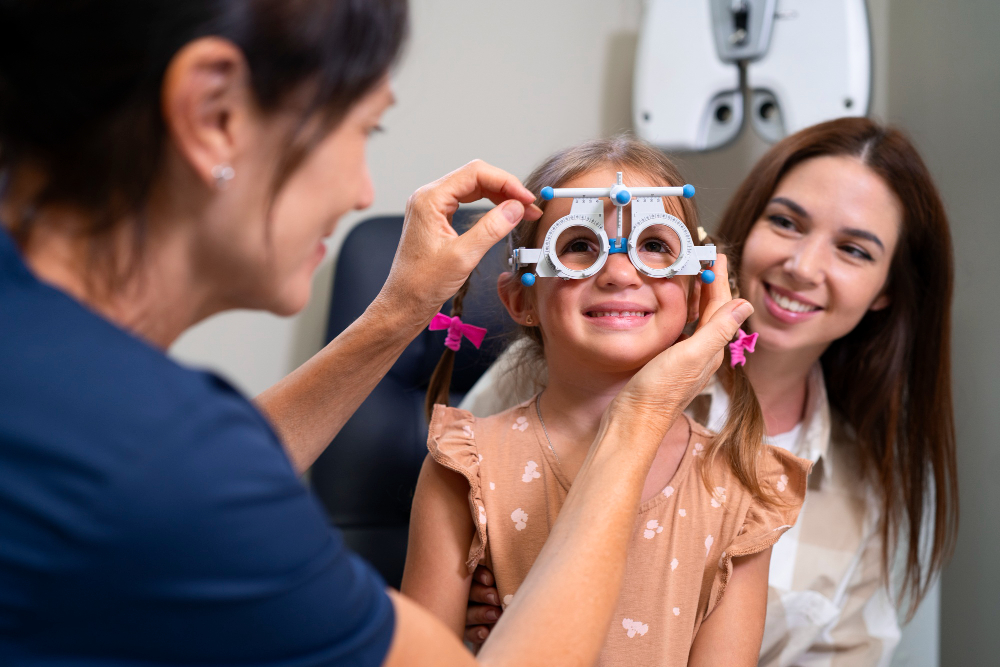
Many parents feel nervous about their child’s first eye exam. However, the process is gentle and simple. Here’s what usually happens:
Most children do well, especially if parents stay calm and supportive.
Tips for Parents to Prepare Their Child for an Eye Exam
Getting ready for an eye exam can help your child feel at ease. Try these tips:
With these steps, your child’s first eye exam can be a smooth experience.
Prevention and Early Intervention Benefits
Early eye exams help prevent serious vision problems. For example, conditions like lazy eye or crossed eyes can be treated if found early. Regular checks also help spot changes as your child grows. Because of this, children’s eye health stays on track. Early action means better learning, safer play, and a brighter future.
Conclusion: Protect Your Child’s Vision Health
In summary, knowing when your child should have their first eye exam is key to healthy eyes. Follow the recommended pediatric eye exam schedule. Watch for signs of vision problems in kids. Above all, schedule an eye exam with a qualified eye specialist at Nayantara Eye Clinic to ensure your child’s vision health.